Sunday, December 1, 2013

Bali and Ubud Writers and Readers Festival: Cultural Reflections Part Two

By Paul Dudley. Continued from last week...


For Australian author Anne Summers patriarchy is a question of structural power. ‘There are three speakers here from Islamic cultures but the principles apply to all of us. It’s a question of economic determination. We need a good education for this, control over our fertility and to be free from violence. All women should work towards this … we need to be global in our aspirations. In Australia we have just been through a traumatic period. Women don’t understand what went wrong. Why were we so unable to deal with a woman as leader? There were issues to do with the way she [Julia Gillard] came to power ... being judged as stabbing in the back. This is OK for men but not for women. [There was] an extraordinary amount of sexual vilification. Why did it happen? In the French Parliament the other day a women was sexually harassed and all women walked out.’

 
Haiden Moghissi, Professor of Sociology at York University Toronto, said the ‘hijab is an emblem of Islam. It is an area where we should have control over our own bodies’. Indonesian poet Debra Yatim said ‘At least allow a discussion for women to choose, “Why do you dare to leave the house without a head dress?” My rights are exercised before God, not you. It’s not compulsory; if I wear it, it is my choosing. We want each woman to have the freedom to wear the hijab if they want, and why not, it’s a hot country. I’m a product of the new order system; I can open boxes or close them.’

 Australian journalist Jennifer Byrne concluded this session by quoting Gillard’s misogyny speech: ‘ “I will not be lectured about sexism and misogyny by this man” ’ [Abbott], and then said reluctantly ‘And now we have him.’ She asked Anne Summers about the term feminism. ‘I don’t like the term,’ Summer’s replied, rejecting it as a label. ‘The definition changes all the time. I would prefer to focus on equal pay.’

 At another event titled ‘Voices of South-East Asia’, panellists discussed the implications of writing when ASEAN creates a single regional common market by 2015. (Australia is not a member state.) Member states traditionally don’t share their literature. There is the problem with censorship boards and few people cross borders so it’s difficult for people to understand each other’s culture and language is sensitive to religion and race. Soon each country will need to be able to translate their literary texts into other languages.

 And the translation of literary texts in Indonesia is looming as a huge issue. Why? Because Indonesia is the guest of honour at the 2015 Frankfurt Book Fair. Normally a country at the fair is afforded 40 to 60 square metres of floorspace for its literature. At Frankfurt 2015, Indonesia will have 6000 square metres to fill, and German curators are worried. At a session with the portentously misnamed title of ‘Translasi’ (it should have been copy edited to ‘Penterjemahan’) the panel and audience discussed the reasons that hinder the proper translation, publishing and retailing of Indonesian literary texts.

Christel Mahnke, head of the Goethe Institut in Jakarta, began: ‘The literary achievement of a country is important … it’s important to know that Indonesia is not only a country for goods but also culture … and to experience this culture we need to be able to read their literary text’. This comment was echoed by John McGlynn, translator and director the Lontar Foundation, who urged ‘We want an historical record of Indonesia texts translated into English for teaching in universities all over the world. But Indonesia is not taking the translation of its literary texts seriously.’ Unlike many countries, the Indonesian government does not subsidise the translation of literary texts. And Indonesia needs translators and editors. At the moment, John said, ‘there are probably only 5 competent translators in Indonesia [he may have been referring to translation from Indonesian to German for the book fair] and it takes about one year to translate a novel’, so the pressure is on to meet the 2015 deadline. Otherwise ‘Germany will have to translate from English rather than directly from Indonesian to German,’ Christel concluded.

 At a forum to discuss the consequences of Bali reliance on tourism, Indonesian writer and actor Ketut Yuliarsa decried the overdevelopment: ‘No building should be bigger than the palm trees.’ J Stephen Lansing, Professor of Anthropology at the University of Arizona, concurred: ‘Bali is in danger of being loved to death and we’re all responsible.’

 Until last year UNESCO had turned down four applications by Bali for world heritage listing. Finally, in May 2012, Bali’s vital wet rice lands – the genesis of Balinese civilisation – were at last recognised as a World Heritage Cultural Landscape. But Indonesian poet and novelist Oka Rusmini says it’s too late. ‘I’m born from highest caste and observed the changes of how Balinese relate to the land. My family owned tracts of land as rice fields that were also used for rituals. We have rituals to do with granaries that are gone. My child born in 1990 has no idea of the rituals to do with rice and land. The issue has a lot to do with tourism ... our people have become brokers for developers’.

 Rio Helmi, an Asian photographer, disagreed ‘Tourism and money is not the cause; it is selfishness and greed. What happened is the responsibility of the Balinese; they opened the door … Classic syndrome … loyalty lines ... first it’s your family, then clan, then caste lines, greed and corruption. They are not concerned for the island but themselves.’ Ketut: ‘What do they [Balinese] want? They want to have cars, be rich.’

But if you want to get to know a country, go to its literature festival. You not only become immersed in a discussion about the literary works that underpin a culture, but also the authors’ and other people’s current interpretation of these works, and the writing, thoughts and ideas they inspire. What I liked most about Ubud was the beautiful surroundings and quiet reflective distance it had from the West. In Australia we live our daily lives so bombarded by a 24-hour media marketing cycle. In Ubud, for the four days the festival was on, the outside world and all that noise seemed shut out to us and we could actually give ourselves a moment to think about other things – ‘some space’ as they say.

I don’t share Richard Flannigan’s caution to the curators to ‘make this an Indonesian festival rather than an expat festival’. There will always be lots of Indonesian content because, as we all know, Indonesians love to talk about their culture and engage with others about theirs. So continuing to bring a whole herd of Westerners to the festival to get a more nuanced perspective about Indonesia from knowledgeable Indonesians, as was originally intended, is a good thing. And what better way is there for us to express our South-East Asianness than to immerse ourselves in the literary culture of our closest neighbour?

Paul Dudley is the editor of the Australian Indonesian news in Victoria, he is currently undertaking postgraduate journalism studies.
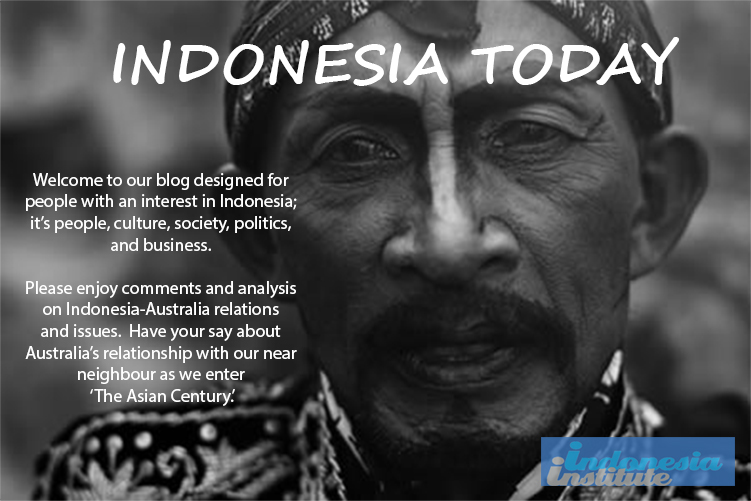
Not the First Australian Intervention

By Thomas Reuters

Indonesia’s response to the spying imbroglio last week — when President Susilo Bambang Yudhoyono recalled his ambassador and suspended security cooperation with Australia — reflects a political history of constant foreign intervention in Indonesian affairs that few Australians are aware of.

Indonesia emerged as a modern nation in the wake of World War II, when Japanese troops ousted the Dutch, who had subjugated and exploited the country for centuries. After the Japanese surrender in August 1945, Indonesia’s founding President Sukarno declared independence.

The new republic lay within the American-dominated South West Pacific Area and was soon handed to the British-dominated South East Asian Command. Allied soldiers arrived in Jakarta in September 1945 and began to occupy major Indonesian cities with the aim of returning Indonesia to its pre-war status as a Dutch colony.

Thousands died in the bombing of Surabaya. Dutch soldiers and administrators returned, led by Hubertus Johannes van Mook, who had run the Dutch East Indies government-in-exile from Brisbane during the war. Dutch POWs, released by Indonesia, were armed and sent back on rampages against Indonesian civilians and police. Australian troops participated in the occupation of the outer islands, including Bali, and were involved in massacres.

The British have since apologized for this cruel attempt to stifle the young nation’s struggle for freedom and sovereignty. Australia has not.

The Sukarno government also clashed with the British when the latter shaped its own former colonies in the region into another modern state. The north of the vast island of Kalimantan was annexed into the new state of Malaysia despite its cultural and historical ties to Indonesia and contested political status, and amid protests by the local population.
An undeclared war (the “Confrontation”) began, and Australian troops participated. Covert operations into Indonesian Kalimantan began in 1964 under the code name Operation Claret. Attempts to assassinate Sukarno failed.

In 1965, Indonesia witnessed one of the greatest genocides of the 20th century, as army general Suharto led a military coup against the left-leaning but essentially nationalist and non-aligned Sukarno government. Up to one million innocent Indonesian civilians were butchered over the following year at a rate of 1,500 people per day, to the applause of Western powers including Australia.

The pretext was a fake coup attempt, falsely attributed to the Indonesian Communist Party (PKI). The deep involvement of British and American intelligence in staging this bloody military coup, similar to the Pinochet takeover of Chile, is beyond reasonable doubt.
The victors were soon able to convene in Switzerland to divide the spoils — Indonesia’s enormous wealth in natural resources — thanks to foreign investment legislation introduced by the military dictatorship. Countless blogs in Indonesia ensure this history is more widely known there than it is in Australia.

The lack of an apology for such consistent unneighborly behavior may seem astonishing in the context of the “Asian Century” and needs to be understood as a direct consequence of the ongoing nature of these operations.

In West Papua, for example, the Indonesian military continues to provide the means of violent coercion required to facilitate vast foreign-owned mining and other ventures not set up primarily to benefit Indonesia, but for which Indonesia’s military will one day be asked to take the political blame.

Continuity, as well as profound ambivalence, is evident in the personal histories of members of today’s Indonesian elite. Looking back to the military coup, for example, we discover that on Nov. 19, 1965:
“…the Australian Embassy in Jakarta proudly reported on an “action”; a massacre, led by an Australian-trained officer. Colonel Sarwo Edhie was a 1964 graduate from an 18-month course at the Australian Army Staff College at Queenscliff, near Melbourne.”

President Yudhoyono is married to his daughter.

What then is the meaning of the current spying scandal?

Why would Australian agencies spy on Sarwo Edhie’s daughter?

Why, for that matter, should Australia spy on Yudhoyono, who has earned himself a bad name in Indonesia precisely for selling out to the interests of Western investors andgovernments? Yudhoyono’s Democratic Party and coalition partner the Prosperous Justice Party (PKS) have been devastated recently by the discovery of corruption involving Australian cattle imports.

Yudhoyono may be hoping that the political theatrics might help to restore his nationalist credentials sufficiently to enable him to serve as kingmaker in the next year’s presidential election. But given that Edward Snowden was the source of the leak, it seems more likely to have been an afterthought.

Rather, the ambiguities in the relationships are such that Australian distrust is easy enough to understand. It is not that Indonesia is actually a threat to Australia. In more than 20 years of research, I have never seen the slightest indication of hostile Indonesian ambitions toward Australia. Instead, the potential threat is that this local elite might turn around, become genuinely nationalistic, and bring the feeding frenzy to an end.

Feelings among the Indonesian elite — even those who have collaborated with Australia in the past — are deeply ambivalent. On his deathbed, Yudhoyono’s father-in-law is said to have repented of his role as a key engineer of the killings. Some of Yudhoyono’s own relatives in the East Javanese city of Blitar suffered in the violence Sarwo Edhie had helped to orchestrate.

Similar patterns emerge when we look at other dynasties, such as the very prominent family of current presidential candidate Prabowo Subianto. Again, we see repeated reversals in Indonesian powerbrokers’ relationships with the Dutch and subsequent foreign powers, oscillating between collaboration and strong opposition.

These ambiguities are now becoming explosive for two reasons. First, Indonesia is a rising power and this is slowly dawning on the national psyche. A new assertiveness can be seen occasionally in political posturing, and there is a new sense in Indonesia of Australia as a small and recalcitrant neighbor that does not want to see the writing on the wall.
Some members of the Indonesian elite also realize Australia is itself a victim of colonial history, and is disadvantaged in the Asian Century by a set of traditional alliances that are difficult to re-negotiate.

Second, after the fall of the Suharto dictatorship in 1998, Indonesians are increasingly becoming aware of their nation’s sad post-colonial history. Even the truth about 1965 — long buried by the Suharto regime — is now being openly discussed and acknowledged.
Considering Australia’s position as a white settler nation in Southeast Asia and being newcomers to the neighborhood, Australians need to consider urgently whether they should loudly and formally distance themselves from this imperial legacy.

How long until it is too late to apologize to a country whose economy is now larger than Australia’s? Indonesia’s leaders, whether Australia deserves it or not, are still receptive to a genuine offer of friendship. I cannot think of any action that would give a greater boost to Australian sovereignty, regional security and prosperity.

It is Australia’s great fortune to be part of Asia, and there is nothing to fear in this neighborhood but our fear itself. It’s time to say “sorry,” and “never again.”

This article originally appeared 27/11/2013, in the Jakarta Globe: http://www.thejakartaglobe.com/opinion/not-the-first-australian-intervention/